
Prime and Composite Project: a Hands-On Math Exploration
Share this post:

I really do love our math series. But sometimes the lessons can feel a bit bland. One great example is our prime and composite numbers unit.
I mean, I can always teach my students the rules for these numbers…
Prime and Composite Project
But it is SO much more fun (and meaningful) when my students can use their own observations to determine strategies with a prime and composite project.
And there is nothing more rewarding than supporting productive struggle as students discover their own connections and understanding.
And this can be done so simply with prime and composite numbers, starting with area models.
Build Area Models
Instead of telling my students all the rules and ways to find prime and composite numbers, we work to build understanding through area models.
First we go through the basics, introducing the terms prime and composite with an anchor chart…and how area models can help us find all factor pairs to determine the category a given number is in:
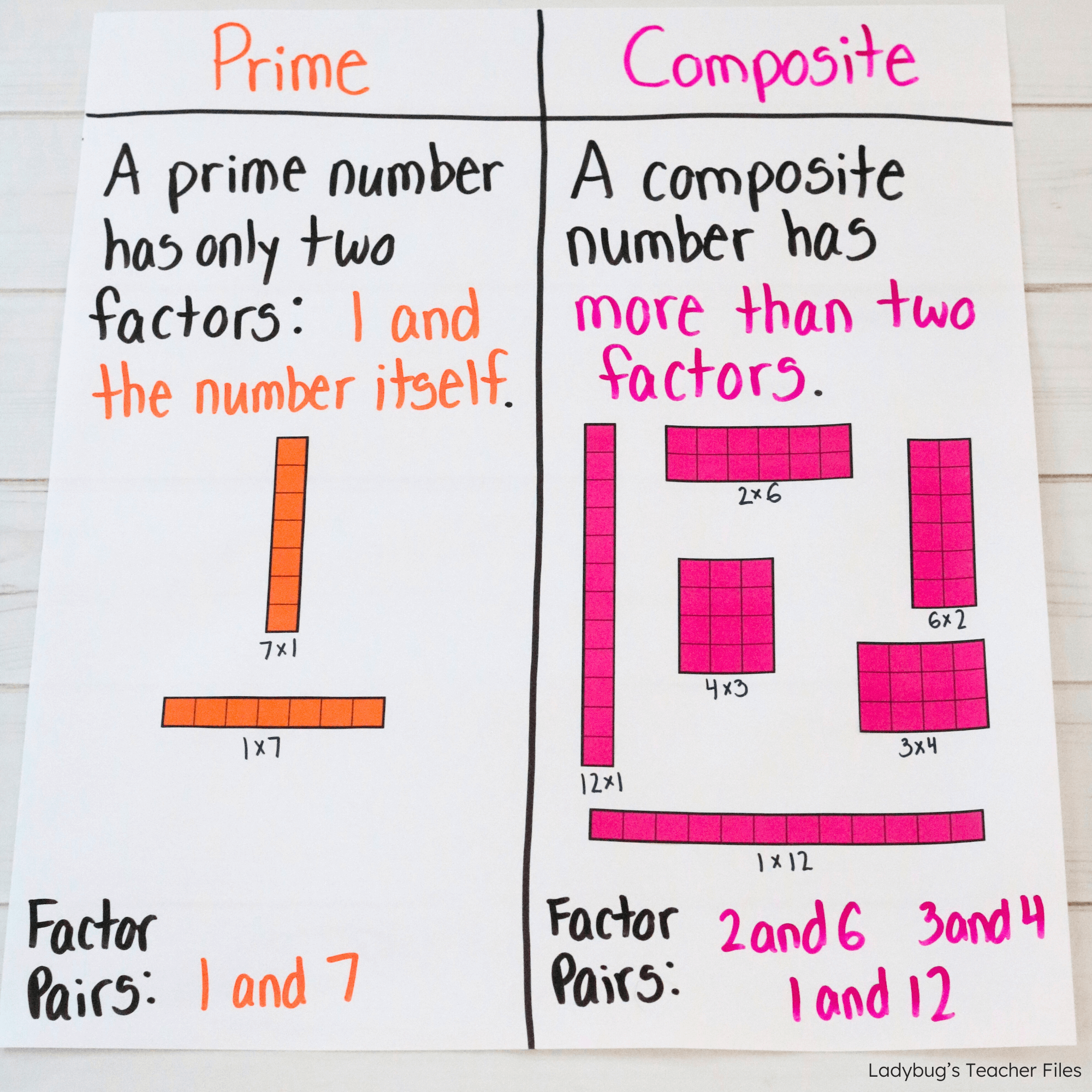
(this anchor chart is part of a set included in this resource: Prime and Composite Numbers Project)
Then I challenge my students to create all possible area models for the numbers 2-40:

(and because they will ask, I share why 0 and 1 are neither prime nor composite…all the details are in student-friendly slides in this Prime and Composite Project Kit)
They LOVE this activity.
As we build the models, students identify whether the number is prime or composite.
And we add it to our prime and composite display:

Analyze Patterns
Once we have completed the prime and composite wall, we take a close look the the numbers.
I ask my students to identify all the prime numbers we’ve discovered. I ask open-ended questions, such as “what patterns do you notice?”
Side note: I LOVE asking these kinds of questions to keep myself from giving answers! And questions like this are such a great way to support productive struggle in math.
I have a free list of questions right here.
After we analyze the prime numbers we’ve found, we repeat the process for composite numbers within 40:
The students are always quick to come to their own understanding…without the need for me to teach them any rules.
For example, they will realize that all even numbers are composite (except for 2, which is prime!).
I showcase student findings on a series of anchor charts, as we create a list of strategies for determining prime versus composite:
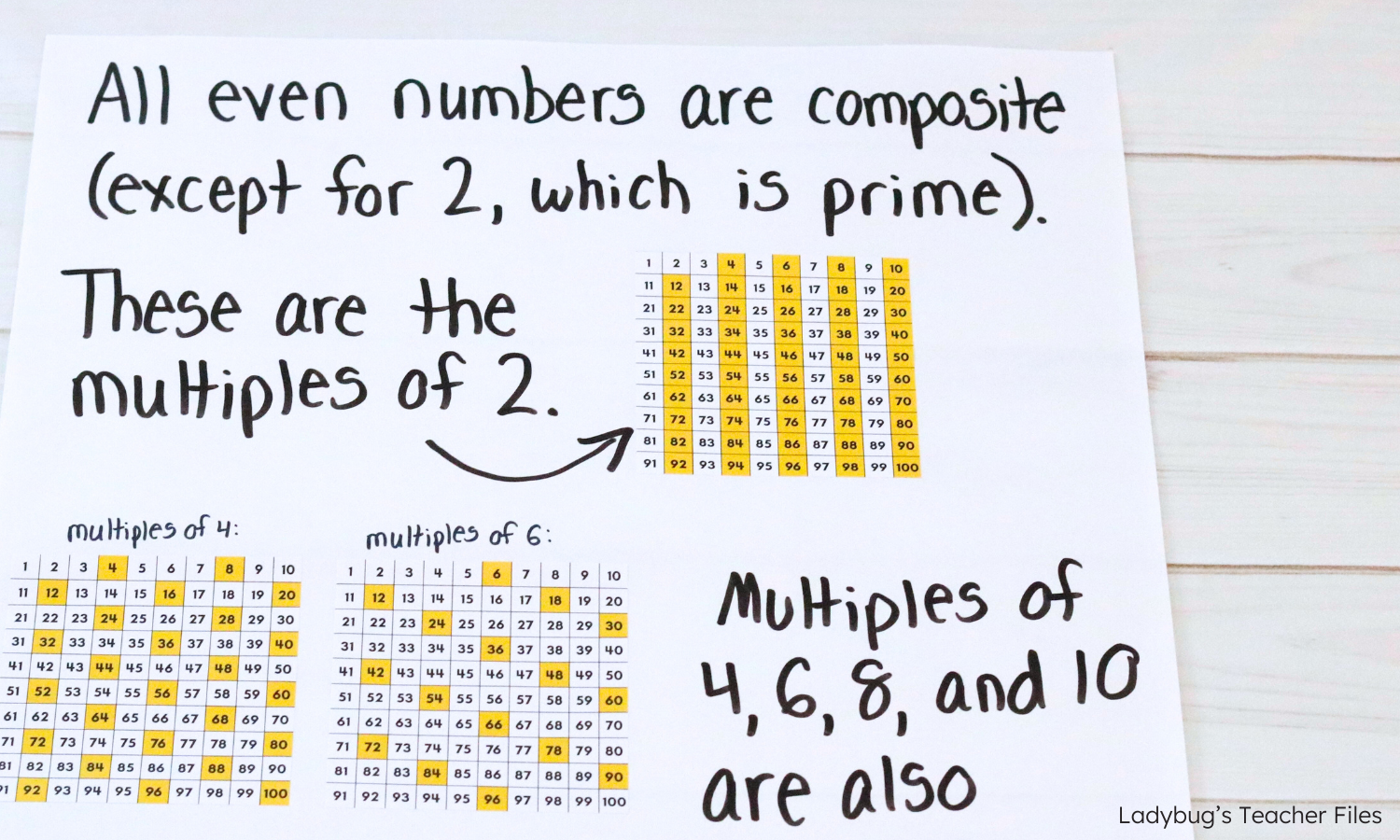
(another anchor chart from the Prime and Composite Numbers Project)
Determine Prime and Composite Numbers within 100
Once we have discovered all the strategies, we use a number chart to determine all the composite numbers first, identifying the prime numbers by process of elimination.
We do this for all numbers within 100:

Prime and Composite Numbers Exploration
This project is a hit each year and I LOVE how it empowers my students to discover their own generalizations and strategies for determining prime and composite numbers.
I created a Prime and Composite Project featuring everything you need to guide this exploration in your own class:

The best part?
You won’t need to plan a single thing.
This prime and composite project will run itself, with teaching slides to guide the entire experience:
Grab the kit here and relax as you watch your students discover prime and composite numbers, all on their own!

Kristen Beakey
I’m an elementary teacher who is driven to design hands-on, scaffolded math lessons and tools for students in 2nd-4th grade. My passion is helping struggling students gain confidence and understanding in math, while saving you time in teaching (because you are busy enough!).
