

Exploring Equivalent Fractions
Share this post:

I knew I wanted my students to write about their thinking in regards to our latest unit on equivalent fractions. I also knew they already had the tools they needed to do so. My students could model equivalence in a variety of ways (folded paper, manipulatives, and drawings). They could also create equivalent fractions by multiplying the numerator and denominator by the same number. Many were comfortable with simplifying fractions through division.
Now I wanted my students to take it to the next level and use their knowledge to explore the equivalence of multiple fractions…and write to explain their thinking.

Some equivalences were easier to spot quickly:

While others took a great deal of thought and discussion among partners:

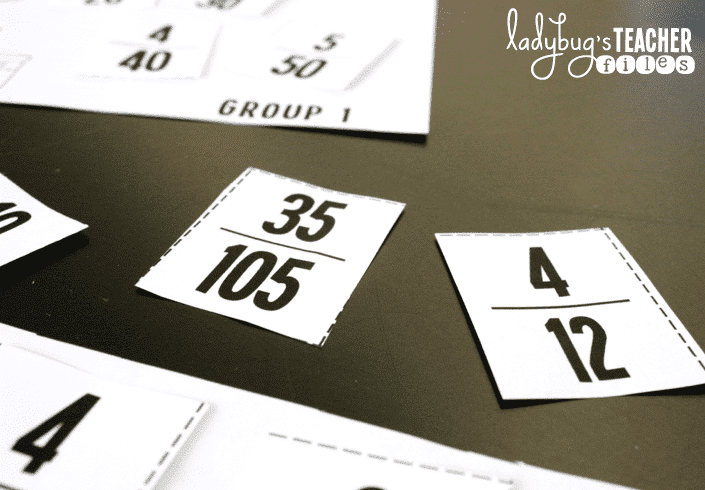
explain to one another. They made calculations, sketched out diagrams, debated over certain
fractions, looked to the simplest form for several of the categories (I
was over the moon when I heard that last one!).
It was a beautiful thing
to witness!
Once my students were sure of their categories, they glued their equivalent fractions in place. Then it was time to share our findings.
Groups came up to the computer projector to share a group of equivalence they found, as well as their strategies for finding the equivalence:

We kept a list of strategies that could be used to find equivalence and added these strategies to our math notes.
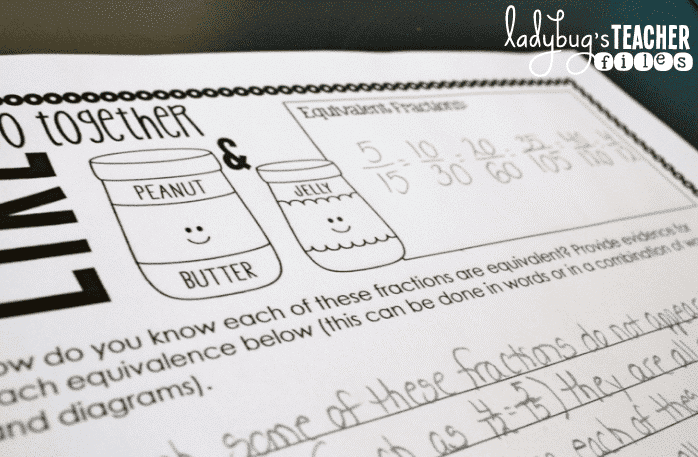
I asked my students to choose one category of equivalence (one that challenged them!) and write an explanation.
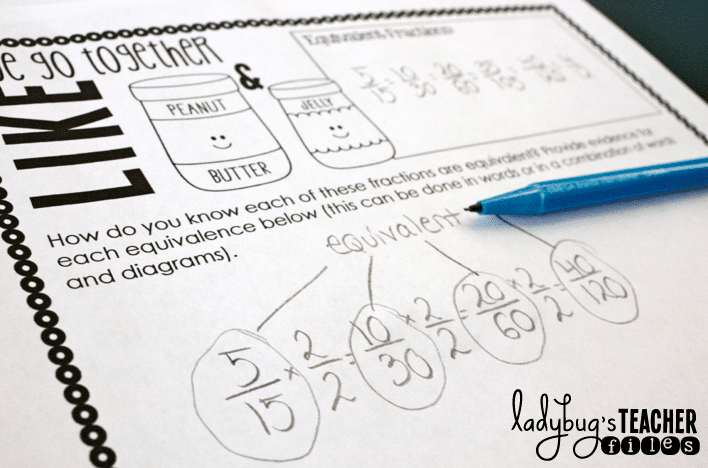
And a lined one as well, to write out their explanation of equivalence:
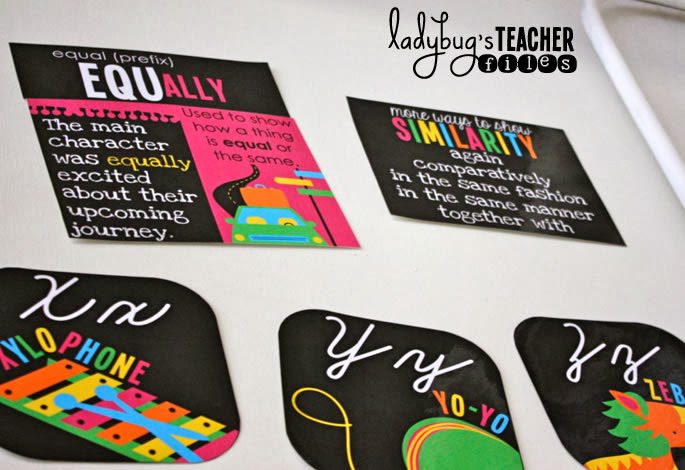
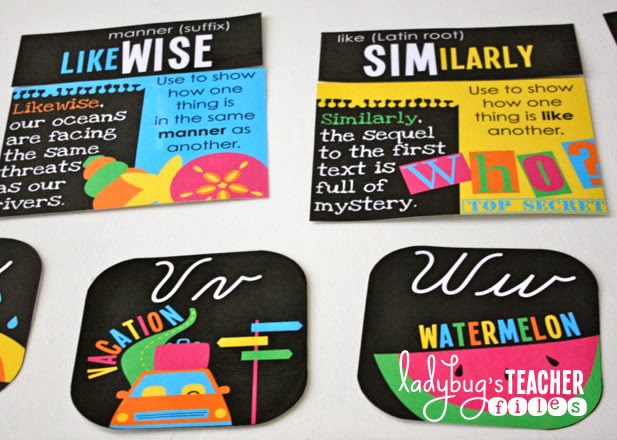
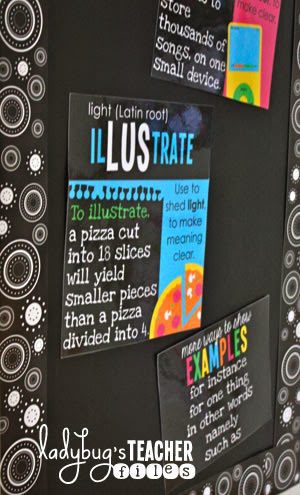
As in all other subjects in class, my students referred to our Transitional Word Posters to help with their explanations:


Kristen Beakey
I’ve been blogging at Ladybug’s Teacher Files since 2010 and I have loved every single minute. This year I’m on a quest to bring back my older days of regular blogging of honest content, from a real classroom…no more “expert articles”. I hope you will be able to join me as I share what’s going well (and what might not be and how I’m working at it!).